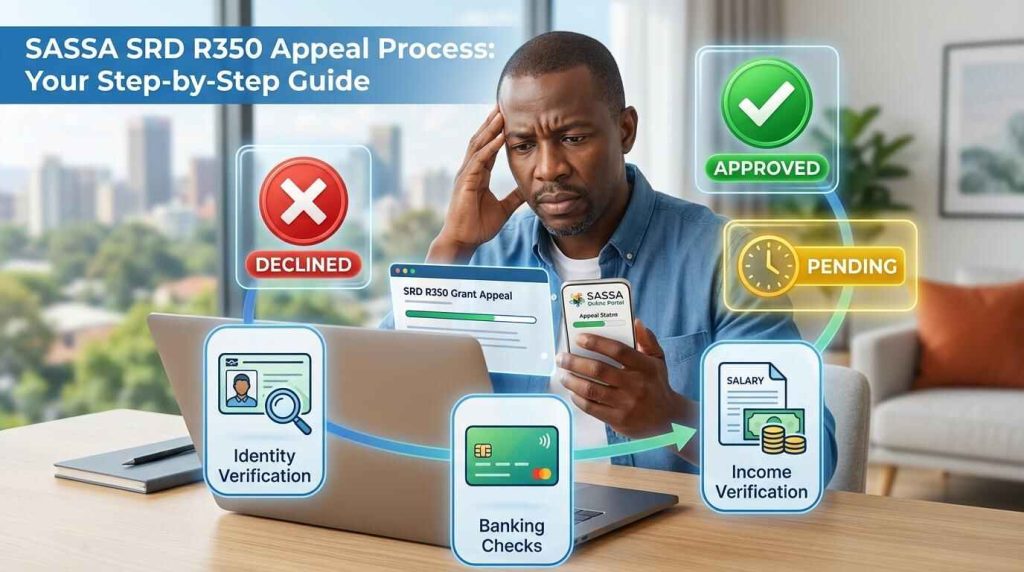
The SRD appeal rejections can be totally frustrating. It’s especially when you genuinely believe that you qualify for the grant. Several South Africans submit a SASSA appeal for R350 just to receive a decline result without even a clear reason. In most of the cases, this doesn’t mean you’re ineligible. It sometimes points to system checks such as income verification and identity mismatching with Home Affairs.
Each appeal is evaluated independently and reviewed monthly, which means even small details can affect the outcome. That’s exactly why understanding how appeals are evaluated, and regularly monitoring updates through an SRD SASSA status check, is really crucial.
In this guide, we’ll explain the exact reasons why appeals get rejected, what exactly SASSA looks for during their reassessment process, and how you can avoid common mistakes that make payments delayed or sometimes blocked.
What Is a SASSA Appeal for R350 and Why It Matters
A SASSA appeal for R350 is a formal request submitted when your SRD grant application is declined, even though you believe you meet all the eligibility criteria. Actually, it’s not a new application, and it doesn’t change the rules for getting qualified. Instead, this feature allows your existing application to be reviewed again by an independent authority in order to check if the decline happens due to incorrect data, system mismatch, or verification errors.
To understand how the appeal process works, it helps you to clearly separate the three different stages that many applicants confuse:
- Application decline:. This happens after SASSA’s monthly checks on income, identity, along with database records. A decline generally means the system found an issue during the verification process, not always that you’re permanently ineligible.
- Appeal submission: At this phase, you formally request the evaluate your application by submitting an appeal within the allowed time window. And, this tells SASSA that you believe the decision needs reassessment.
- Appeal reassessment: Your appeal is reviewed independently though updated records that include Home Affairs verification, bank data, and income sources. The outcome can be approved or sometimes declined based on the fresh review.
Tracking your appeal status during the appeal window is extremely important. Missing updates or deadlines can delay payments or result in the appeal being closed altogether. Regularly monitoring progress through an SRD appeal status check ensures you stay informed, respond quickly if further action is needed, and avoid unnecessary payment delays.
How the SRD Appeal Review Process Works
Here’s a clear, step-by-step breakdown of what actually happens after submission.
Step 1: Independent Reassessment Begins
After submission, your appeal isn’t reviewed by the same automated system that declined your application. Instead, it’s sent for an independent SRD appeal reassessment, which exists specifically in order to recheck decisions that may have been affected by data mistakes or sometimes mismatches. This step ensures fairness and reduces system-based mistakes.
Step 2: Monthly Income Verification
During the appeal review, SASSA performs monthly income verification again. Bank records, temporary deposits, along with linked financial data are evaluated to confirm if your income truly falls below the SRD threshold. This is why an appeal outcome can differ from the original decision.
Step 3: Identity and Banking Detail Checks
Your South African ID numbers are revalidated with the Department of Home Affairs, while banking details are reviewed to confirm ownership and authenticity. Several appeals are approved at this stage if earlier deliveries were caused by an identity mismatch or incorrect bank verification.
Step 4: Final Appeal Decision Processing
Once all verification stages are completed, a final decision is made. Now, this decision shows the most updated and correct data available at the time of review, not the data that was used during the original decline.
Why SRD Appeal Decisions Take Time
Appeals actually take longer because they’re not automated approvals. Each case is reviewed individually, mostly alongside thousands of others, and depends on third-party databases. Delays generally happen due to pending income confirmation or sometimes verification backlogs.
What “Pending” Means During Appeal Review
A pending SRD appeal status doesn’t mean rejection every time. It simply signals that one or more checks, like income reassessment or identity validation, are still in progress. In some cases, pending means your appeal is actively being reviewed and hasn’t yet reached a final outcome.
Top Reasons SRD Appeals Get Rejected (with Solution)
Several SRD appeals fail not just because applicants are ineligible, but because of data issues, system assumptions, or appeal submitted for the wrong reasons. So, understanding these rejection triggers can truly save you weeks of waiting and help you take the right action at first. Here’s a detailed view on top reasons:
1. Income Detected Above the Threshold
One of the most common reasons of SRD appeal rejection is income detection that appears higher than the allowed limit. This does not always mean that you earn a regular salary.
SASSA’s system reviews bank activity month by month. Temporary deposits like family transfers, once-off support, refund credits, or even short-term cash support can be flagged as income. Whenever this happens, the system assumes financial stability, even if the money was not recurring.
During appeal reassessment, these deposits are reviewed again. If similar transactions continue to appear, then the appeal may still be declined. This is why applicants should be cautious with incoming funds during review periods and regularly monitor their SRD appeal status check.
2. Incorrect or Outdated Banking Details
Banking issues cause a surprisingly high number of appeal rejections. Common problems include:
- Bank account not registered in the applicant’s own name
- Closed or inactive accounts are still linked to the application
- Use of third-party accounts belonging to relatives or friends
SASSA verifies bank ownership strictly. Even if the original decline was not bank-related, incorrect details can surface during appeal review and lead to rejection. Keeping banking information accurate is essential for both approval and payment release.
Banking issues also cause a surprisingly high number of appeal rejections. Here, common problems include:
Bank account not registered in the applicant’s own name.
Closed or inactive accounts
3. UIF or NSFAS Incorrectly Linked
Many applicants face rejection because the system shows UIF or NSFAS benefits that are no longer active. Old employment records, delayed database updates, or past student funding can incorrectly signal ongoing support.
During appeal reassessment, SASSA checks these databases again. If records still show benefits, the appeal may be declined even if you are currently unemployed. This is one reason applicants often track both SRD appeal for declined months and verification updates closely.
4. Identity Verification Issues
Identity mismatches are another major cause of failed appeals. Even minor discrepancies can trigger automated failure, including:
- Spelling differences in names
- Incorrect ID numbers
- Outdated Home Affairs records
When your identity does not match exactly across systems, SASSA cannot approve the appeal. Applicants facing this issue often see repeated pending statuses before rejection. Resolving Home Affairs data first is critical before submitting or tracking an appeal.
5. Appealing Without a Valid Reason
Not every decline should be appealed. Appeals are meant to correct verification errors, not to change eligibility conditions. When an applicant appeals despite clearly exceeding income limits or no longer meeting criteria, the appeal is often rejected instantly.
In cases where financial circumstances have genuinely changed, reapplication is usually more effective than appeal. Understanding the difference helps avoid unnecessary delays and repeated rejections during the SRD appeal review process.
Knowing these rejection reasons puts you in control. Instead of waiting blindly, you can identify the real issue, take corrective steps, and improve your chances of a successful SRD appeal outcome.
How to Avoid SRD Appeal Rejection
Here’s how you can avoid:
- Check These Things Before Submitting an Appeal
Before filing an appeal, review the exact reason for decline shown in your status. If the reason relates to income, identity verification, or linked benefits, you need to confirm whether it’s genuinely incorrect. Appeals work well when there’s a clear system or data error. If your financial situation has changed recently, waiting and reapplying may be a better choice than appealing.
- Verify Banking and Personal Details Carefully
Ensure that your bank account is active, registered in your name, and matches your ID details exactly. This is because even small differences in names or incorrect account numbers can be a reason for rejection during appeal reassessment. Moreover, you should confirm your ID number, surname, and date of birth (D.O.B.) match Home Affairs records. Now, these checks are repeated during appeal review, not just during initial application.
- When to Wait vs When to Act
If your status shows pending, it generally means that verification is still in progress. Submitting multiple appeals or changing your details at this stage can show the process. However, it a clear error is visible, and no update occurs for an extended period, that’s the right moment to act. So, knowing when exactly to wait prevents unnecessary system flags.
- Submit Within the Allowed Timeframe
Appeals must be submitted within the specified window, generally within 30 days of the decline. And, if you miss this timeframe, then it can result in automatic rejection, regardless of eligibility. Submitting early also allows enough time for reassessment before even the next payment cycle.
Deep Dive: Common System Errors That Cause SRD Appeal Rejections
Even when applicants meet all eligibility criteria, SRD appeals can fail due to system errors that SASSA doesn’t always explain. Understanding these errors helps prevent unnecessary rejections:
a) Bank Statement Parsing Errors
- Temporary deposits such as family gifts, one-off refunds, or small transfers can be mistakenly flagged as recurring income.
- During appeal reassessment, SASSA reviews these transactions. Regular monitoring and documentation can prevent misinterpretation.
b) Home Affairs Database Mismatches
- Spelling mistakes, outdated records, or discrepancies in ID numbers can cause automatic rejection.
- Ensure that your surname, first name, and date of birth match exactly across SASSA and Home Affairs records.
c) Overlapping UIF or NSFAS Records
- Inactive UIF or past NSFAS payments sometimes appear as ongoing support, signaling to the system that you are financially supported.
- Verify your linked databases and clarify inactive benefits before submitting an appeal.
Tip: Regularly checking your SRD appeal status ensures that you catch system errors early and respond proactively.
SRD Policy Updates & Timeline Tracker
SASSA frequently updates SRD policies, which can affect appeals and payment processing. Staying informed gives you an edge:
| Month | Policy / Update | Action for Applicants |
|---|---|---|
| January | Payment increase from R350 → R370 | Ensure bank details are updated for new amount |
| February | New eligibility verification rules | Double-check income and UIF/NSFAS records |
| March | Appeal submission window clarified | Submit appeals within 30–90 days |
| Monthly | Regular reassessment of declined applications | Monitor SRD appeal status online or via WhatsApp |
Why it matters: Understanding when SASSA conducts income verification and appeals reassessment can prevent delays or missed deadlines.
💡 Pro Tip: Mark your calendar each month to track the appeal submission and approval timeline.
Impact of SRD Appeal Rejections on Finances and Alternatives
Being declined or pending on an SRD appeal can create financial strain. Here are strategies to cope while waiting:
Emergency Support Options:
- Community programs or NGO aid: Many local NGOs provide temporary food, rent, or utility support.
- Family or community help networks: Short-term financial support from trusted contacts.
Temporary Government Assistance:
- Other social grants: If eligible, check for Child Support Grant, Disability Grant, or Older Person’s Grant.
Planning Ahead:
- Keep a monthly budget anticipating potential delays in SRD payments.
- Maintain documentation ready for any re-submissions or new applications.
Tip: Financial planning during appeal periods prevents panic and ensures you meet essential expenses even if SASSA delays payments.
Myths & Misconceptions About SRD Appeals
Several myths can mislead applicants and cause unnecessary rejections or confusion. Here’s the truth:
Myth 1: “Pending means rejection.”
- Fact: Pending simply indicates that verification is ongoing. Your appeal may still be approved.
Myth 2: “You can appeal multiple times for the same month.”
- Fact: SASSA allows only one appeal per declined month. Filing again can create system flags.
Myth 3: “Appeals automatically fix income or identity issues.”
- Fact: Appeals only reassess your case. Errors in bank info, Home Affairs records, or linked benefits must be corrected by the applicant.
Myth 4: “Appeal decisions are immediate.”
- Fact: Each appeal is reviewed monthly, alongside thousands of others. Delays are normal.
Pro Tip: Educate yourself on these myths before appealing — it prevents repeated mistakes and unnecessary stress.
Advanced Troubleshooting for Recurring Declines
If your appeal keeps getting rejected despite meeting eligibility criteria, these advanced steps can help:
- Cross-Check Home Affairs Data
- Confirm your name, surname, ID number, and date of birth exactly match official records. Minor errors trigger automatic rejection.
- Prepare Bank Statements Properly
- Highlight temporary deposits and one-off income in statements. Keep a separate note explaining these entries for verification.
- Monitor Linked Benefits
- Check UIF or NSFAS databases for outdated entries. If they still show as active, provide proof of closure or cessation.
- Document Financial Changes Monthly
- Keep a record of income, support received, or unusual deposits to help clarify during appeals or reconsideration.
- Track All Appeal Status Updates
- Use the official portal, WhatsApp, or the call centre. Respond promptly if SASSA requests additional information.
💡 Pro Tip: Advanced preparation minimises recurring declines and strengthens your chances of approval on the first appeal.
Conclusion
An SRD appeal is not all about a follow-up step. Over and above that, it’s a really critical opportunity in order to correct errors that can stand between you and much-needed financial support.
Most of the SRD appeal rejections of appeal happen due to avoidable issues like income misinterpretation, outdated banking details, or sometimes identity mismatches. Understanding how the appeal process works, knowing when an appeal really makes sense, and preparing your details precisely can make a real difference in the outcome.