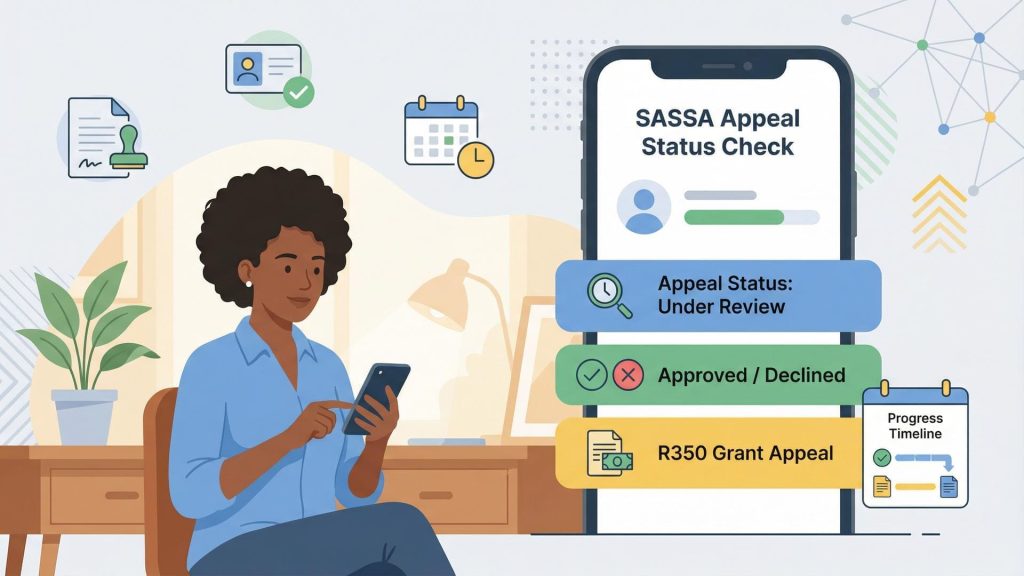
Numerous SRD R350 applications are being declined due to income checks, identity mismatches, UIF, or sometimes NSFAS records, or incorrect personal details. In such cases, submitting an appeal gives all applicants a fair chance to have their information reviewed again. The SASSA appeal status check is truly essential because it shows if your SASSA Appeal for R350 is progressing, approved, or even needs further action, or not.
By checking your SASSA status appeal regularly, you can understand the exact reason behind a decision, respond in time, and avoid missing payments once your appeal is approved.
What Is SASSA Appeal Status Check?
The SASSA Appeal Status Check is such a dedicated process that allows all applicants to track the outcomes of an appeal submitted after an SRD R350 grant rejection.
Unlike a normal status check, it actually shows whether your appeal has been reviewed, approved, or declined after reassessment by an independent authority. Now, this distinction is mostly unclear, which leads several applicants to check the wrong status and miss crucial updates.
How it differs from an SRD SASSA Status Check:
The SASSA Appeal Status Check allows applicants to track the results of an appeal that was submitted after an SRD R350 grant rejection. It’s especially crucial for those monitoring a SASSA appeal for R350, and gives a clear visibility on whether the appeal has been received, reviewed, or even finalized. Different from the standard SASSA status check online, the appeal status primarily focuses on applications that were previously declined. It shows whether your appeal has approved, is pending, or has been declined after reevaluation. Most of the applicants miss essential updates due to checking their incorrect status.
For all those people who have several declined applications, tracking their SASSSA appeal for declined months truly helps them identify the exact reason for repeated rejections. By checking, they can ensure that their details are totally correct and let them stay informed about each and every step of the appeal process.
When you regularly monitor your appeal status, you prevent delays, avoid unnecessary re-submissions, get clarity on how exactly SASSA manages appeals, and ensure timely payments while reducing confusion for applicants relying on SRD support.
Why are appeal results reviewed separately:
- Appeals are evaluated again independently in order to ensure fairness.
- Updating income, identity, or even banking details is reverified.
- Mistakes from automated checks are corrected.
Who should check appeal status and when:
- Applicants whose R350 grant was declined.
- Anyone who submitted an appeal is still waiting for reevaluation.
- Monthly, as appeal outcomes can change.
Understanding SASSA Appeal for R350
A SASSA Appeal for R350 is the formal process that gives applicants the opportunity to request a second review when their SRD grant application is granted. It’s useful to correct genuine errors, not to bypass eligibility rules. As most applications are rejected due to automated checks, that’s exactly why the appeal stage is important for reevaluating accurate and updated information.
In order to qualify as a valid appeal, the original decline should be linked to issues such as incorrect income detection, identity verification issues, or even outdated details. Actually, SASSA doesn’t review appeals once and closes them permanently. Rather than the system following a monthly-based reassessment, meaning each month’s eligibility is checked separately.
During the appeal review, SASSA reassesses:
- Income and financial activity through third-party databases
- Identity details with the Department of Home Affairs
- Bank account ownership and transaction status
Just because these checks are repeated, an appeal does not guarantee approval. Decisions completely depend entirely on whether update data meets the grant criteria.
When Should You Submit a SASSA Status Appeal?
A SASSA Status Appeal must be submitted only if there’s a valid reason. This is to believe your SRD R350 application was declined due to an error. That’s exactly where a SASS appeal for R350 becomes relevant. Comprehending when to appeal and when not to helps you prevent repeated rejection and unnecessary delays while doing a status check online. Here’s a detailed view:
- Incorrect income detection
If your bank activity or some temporary deposits caused SASSA to reckon your income above the threshold, then submitting a SASSA appeal for declined months is truly recommended, especially if your income shown doesn’t demonstrate your actual financial situation.
- Identity or personal detail mismatch
Mistakes in ID numbers, names, or sometimes Home Affairs records mostly justify an appeal. When you correct the details, you should regularly check declied appeal SASSA status to check if your issues has been resolved.
- UIF or NSFAS wrongly linked
If you’re not actively receving UIF or even NSFAS but the system shows otherwise, then filing a SASSA appeal for R350 is appropriate in order to resolve the mismatch reflected during your SRD SASSA status check online.
- When reapplication is a better option
If your financial condition has genuinely altered and the decline was valid at the time, reapplying can be more effective than submitting an appeal for declined months.
- Appeal submission time limit
Appeals should always be filed within the allowed period, typically 30 days after the decline notice. If you use this window, then it can affect your ability to successfully complete a SASSA appeal for R350 and track progress through the system.
How to Do SASSA Appeal Status Check Online (Step by Step)?
Checking your appeal status online is really a simple and official process; however, only if you use the correct platform. Most of the applicants get confused or misled by unofficial websites, that’s really why following the right steps matter.
Where to check your appeal status?
You should always check your status only through the official SASSA appeal portal or approved government channels. Always prevent third-party sites that ask for payments or sometimes unnecessary personal details.
Details you need before starting
- South African ID number
- Mobile number used during application
- One-Time PIN sent to your phone
Step-by-step process
- Visit the official SASSA appeal status page.
- Enter your ID number and registered mobile number.
- Request and enter the OTP received via SMS.
- Submit your details to view your appeal status.
What will you see on the result page?
Your appeal result will clearly show whether it’s approved, pending, or declined, along with reasons where applicable.
How often are status updates?
Actually, appeals statuses are updated periodically, not daily. Checking once or even twice a week is enough to prevent any confusion and misinformation.
How Long Does SASSA Appeal Review Take?
The status doesn’t update instantly as appeal reviews involve deeper verification than standard SRD status checks. Understanding the timelines helps set realistic expectations and reduce unnecessary stress.
Typical appeal processing timelines
Most SASSA appeals take between 30 to 90 days to be reviewed. In some cases, especially during high application volumes, the process may extend beyond this period.
Why do appeal reviews take longer than SRD checks
Appeals are reviewed independently and manually validated against multiple databases, including income, identity, and banking records. This extra layer of verification takes time.
Factors that delay appeal decisions
- High number of appeals in the system
- Mismatched or outdated personal details
- Bank verification issues
- Delays in third-party data updates
When to expect updates
Applicants should realistically check their appeal status every few weeks. Frequent daily checks do not speed up the process and often lead to confusion.